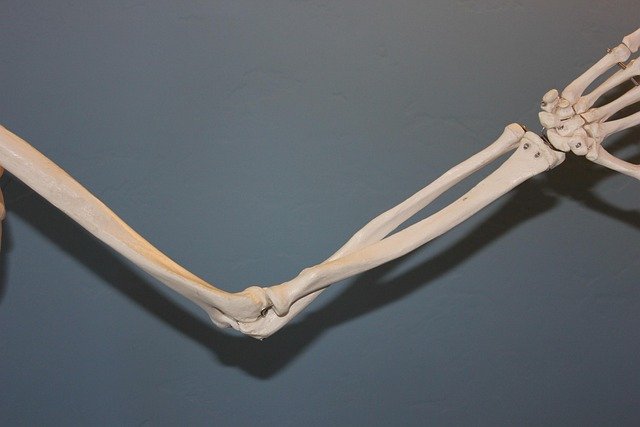
In the first five to seven years after menopause, women can lose up to 20% of their bone density. That’s not a slow drift — it’s the steepest decline of your life. The good news: bone is living tissue, and much of what determines its strength is within your control. Let’s separate what truly protects your skeleton from what just sounds good.
Estrogen is one of your bones’ best friends. It restrains the cells that break bone down, so when estrogen falls during the menopause transition, bone breakdown accelerates. This is why osteoporosis is overwhelmingly a women’s disease, and why midlife — not your seventies — is the moment that matters most for prevention.
Here’s the framework I use with patients, sorted by how strong the evidence actually is.
Vitamin D — necessary, but not magic
Vitamin D lets your gut absorb calcium. Without enough, you can eat all the calcium you want and still come up short — your body simply can’t take it in. Severe deficiency causes soft, weak bones. So adequate vitamin D is genuinely necessary for bone health.
But here’s the honest nuance the headlines miss: in women who already have enough vitamin D, taking more doesn’t build extra bone or prevent fractures. Vitamin D corrects a deficiency; it isn’t a bone-building drug. The goal is sufficiency, not megadosing.
What’s the optimal blood level?
Vitamin D status is measured as serum 25-hydroxyvitamin D (25-OH D). The evidence points to a clear target:
| 25-OH D Level | Interpretation |
|---|---|
| Below 20 ng/mL | Deficient — associated with lower bone density and higher bone turnover. Correct this. |
| 20–29 ng/mL | Insufficient — a reasonable improvement target, but not yet optimal for bone. |
| ~30–50 ng/mL | The sweet spot for bone health. Above roughly 30 ng/mL, the parathyroid hormone that pulls calcium from bone settles to its plateau — a sign your bones aren’t being raided to keep blood calcium up. |
| Above 50–60 ng/mL | No added bone benefit, and very high levels can cause harm. More is not better. |
Practical approach: get a 25-OH D level drawn, then use D3 (cholecalciferol, the more effective form) to reach roughly 30–50 ng/mL. Many women land there on 1,000–2,000 IU daily, but the dose should be guided by your actual number, then rechecked. Testing beats guessing in both directions — under- and over-doing it.
Vitamin D + K2 — promising, but don’t oversell it
The theory is elegant: vitamin K2 activates a protein (osteocalcin) that helps bind calcium into bone, and another (matrix Gla protein) that helps keep calcium out of your arteries. So K2 is meant to direct calcium to where you want it and away from where you don’t.
What the evidence shows: it’s genuinely mixed, and I’d rather you hear that than a sales pitch. Several meta-analyses in women who already have osteoporosis show K2 can improve spine bone density and reduce fractures. But one of the better-designed trials — three years of high-dose MK-7 in women with osteopenia — found no difference in bone density versus placebo. So K2 is a reasonable, low-risk addition, especially if you have established bone loss, but it is not a proven substitute for the fundamentals.
One real safety note on K2
If you take warfarin (Coumadin), do not start K2 without talking to your physician — vitamin K directly opposes how that medication works. (This isn’t a concern with the newer blood thinners like apixaban or rivaroxaban, but check with your doctor regardless.)
Calcium — food first, supplements second
Calcium is the raw material of bone, and most women need about 1,000–1,200 mg per day (total, from food plus supplements). But the source matters more than most people realize.
Food-first is the rule, for two reasons. First, dietary calcium comes packaged with protein and other nutrients bone needs. Second, large amounts of supplemental calcium — beyond filling a real dietary gap — have been linked to a possible increase in kidney stones and, in some studies, cardiovascular risk. Whole foods don’t carry that signal.
- Best food sources: dairy (milk, yogurt, cheese), fortified plant milks, tofu set with calcium, sardines and canned salmon with bones, leafy greens like kale and bok choy, almonds, and white beans.
- If you supplement to fill a gap: calcium citrate absorbs well with or without food and is gentler if you have low stomach acid or take acid-reducers; calcium carbonate is fine taken with meals. Split doses to 500 mg or less at a time for better absorption.
Creatine — better evidence for muscle than for bone (but that still helps)
Creatine has become popular in the women’s-health world, and for good reason — but let’s be precise about what it does for bone. The direct bone evidence is mixed: a one-year trial in postmenopausal women paired with resistance training showed slower bone loss at the hip, but a larger two-year follow-up found no significant difference in bone density (though it did improve some measures of bone geometry, or structural strength).
Where creatine’s evidence is much stronger is in supporting muscle mass, strength, and power when combined with resistance training. And that matters for your bones two ways: stronger muscles pull harder on bone (stimulating it), and better strength and balance mean fewer falls — which is what actually prevents most fractures. So I view creatine as a reasonable, safe, inexpensive adjunct (typically 3–5 g daily) to a strength program — valued mainly for muscle and fall prevention, with possible bonus effects on bone structure.
The real bone-builder: the right kind of exercise
Here’s the part that genuinely moves the needle — and where most popular advice gets it wrong. Not all “exercise” builds bone. Bone responds to load and impact: it strengthens when you stress it with forces larger or faster than ordinary daily movement. This is what “weight-bearing exercise” really means — not just being on your feet, but loading the skeleton.
What works best
The strongest evidence is for progressive resistance training (lifting meaningful weight) and impact/jumping. The landmark LIFTMOR trial showed that even women with low bone mass safely improved spine and hip bone density using high-intensity resistance and impact training under proper supervision. Heavy, compound movements — squats, deadlifts, overhead presses — paired with some jumping or hopping are the proven recipe.
Lower-impact options that still load bone
Not everyone can or should start with heavy lifting or jumping — and you don’t have to, to begin. These build the loading stimulus more gently. The key is that they still create force through the bone, not just movement.
Heel drops
Rise up onto the balls of your feet, then let your heels drop firmly to tap the floor. That little jolt sends a controlled impact up through the hips and spine. Start with 10–20, holding a counter for balance.
Bodyweight squats & sit-to-stands
Standing up from a chair without using your hands, repeated, loads the hips and thighs and builds the leg strength that prevents falls. Progress by going slower or holding light weights.
Step-ups & stair climbing
Stepping up onto a sturdy step loads each hip in turn against gravity — more bone stimulus than flat walking.
Resistance bands & light dumbbells
A gateway to resistance training you can do at home. The goal over time is to progress the load — bone adapts to challenge, so gradually doing more is what keeps it responding.
Does walking, running, or a weighted vest build bone?
This question comes up constantly, so let me answer each directly and honestly.
Walking — wonderful for you, but not a bone-builder
Walking is excellent for your heart, mood, and overall health, and I want you doing it. But the bone research is clear and a little disappointing: walking alone produces little to no measurable gain in bone density at the hip or spine. The forces simply aren’t large enough to stimulate bone. Walk for everything else it gives you — just don’t count on it as your bone strategy.
Running & higher-impact activity — modestly helpful
Running and jogging generate larger ground-reaction forces than walking, and higher-impact activities (jumping, hopping, dancing with impact) do show modest bone benefits in the research. If your joints tolerate it, impact is your friend here.
Weighted vests — it depends entirely on how you use it
This is the most misunderstood one. The popular idea is “wear a weighted vest on your walks to build bone.” Unfortunately, the studies don’t support that version. Simply adding a vest to walking hasn’t reliably improved bone density.
The nuance that matters
The famous positive weighted-vest study had women wear the vests while doing jumping and resistance exercises — not while strolling. The vest amplified an already bone-loading activity. So a weighted vest can be a useful tool to add load during squats, step-ups, or jumping — but it is not a magic garment that turns a walk into a bone workout. The exercise underneath it is what counts.
When should you actually get a bone density (DEXA) scan?
Here’s where I’ll be candid about my disagreement with the standard guidance. The U.S. Preventive Services Task Force recommends routine screening starting at age 65 for average-risk women. The problem? For many women, meaningful bone loss has already happened by then. Waiting until 65 can mean discovering osteoporosis after it’s established, rather than catching it when prevention is most effective.
In my practice, I favor a more proactive approach — establishing a baseline DEXA around the menopause transition, particularly when there are risk factors, so we can act while we still have the most leverage. It’s worth discussing earlier screening with your physician if any of these apply to you:
- A personal history of fracture as an adult (especially from a minor fall)
- A parent who had a hip fracture
- Early menopause (before 45) or surgical menopause
- A small or thin frame
- Long-term steroid use, or conditions/medications that affect bone
- Smoking, heavy alcohol use, or rheumatoid arthritis
- Simply wanting a baseline to track change over time
A baseline scan in midlife isn’t about alarm — it’s about information. You can’t manage what you haven’t measured, and bone is far easier to protect than to rebuild.
If you have daughters, start the protection a generation early
Here’s something I wish every mother knew: your daughter is building the skeleton she’ll live on for the rest of her life right now. Roughly 90% of peak bone mass is laid down by age 18, and peak is reached by the late twenties. After that, the task shifts from building to preserving.
That makes the teens and twenties a once-in-a-lifetime window. A daughter who enters adulthood with a higher peak bone mass has a larger reserve to draw down later — and may never cross into osteoporosis at all, even with the same menopausal bone loss every woman faces.
The three things that matter most are the same ones in this article, just earlier:
- Calcium — adequate intake during the teen years is critical; this is the time the skeleton is most hungry for it.
- Vitamin D — sufficiency supports that calcium actually getting absorbed and deposited.
- Weight-bearing & impact exercise — sports, running, jumping, dancing, lifting. Active girls build denser bone, and the impact years of youth pay dividends for decades.
If you’re investing in your own bones, bring your daughters along. It may be one of the most valuable health gifts you can give them — and unlike so much in health, the window for it is genuinely time-limited.
The bottom line
- Vitamin D: necessary, not magic. Aim for a blood level around 30–50 ng/mL — correct a deficiency, don’t megadose.
- D + K2: promising and low-risk, especially with established bone loss, but the evidence is mixed — not a replacement for the fundamentals. (Warfarin users: check first.)
- Calcium: 1,000–1,200 mg/day, food first; supplement only to fill a real gap.
- Creatine: stronger for muscle and fall prevention than for bone directly — a reasonable adjunct to a strength program.
- Exercise is the real bone-builder: resistance training and impact work. Walking is great for you but won’t build bone; a weighted vest only helps if you’re loading the skeleton beneath it.
- DEXA: consider a baseline around menopause rather than waiting until 65 — especially with risk factors.
- Daughters: peak bone mass is built by the late twenties. Calcium, vitamin D, and impact exercise early are a lifelong gift.
Strong bones aren’t built by any single pill — they’re built by getting the foundations right and starting before you think you need to. If you’d like to map out your own bone-protection plan, including the right testing and a strength program suited to where you are now, that’s exactly the kind of thing we can do together.
Selected References
- Watson SL, et al. High-intensity resistance and impact training improves BMD and physical function in postmenopausal women with osteopenia and osteoporosis: the LIFTMOR randomized controlled trial. J Bone Miner Res. 2018;33(2):211–220.
- Martyn-St James M, Carroll S. Meta-analysis of walking for preservation of bone mineral density in postmenopausal women. Bone. 2008;43(3):521–531.
- Snow CM, et al. Long-term exercise using weighted vests prevents hip bone loss in postmenopausal women. J Gerontol A Biol Sci Med Sci. 2000;55(9):M489–M491.
- Serum 25-OH vitamin D in relation to bone mineral density and bone turnover in postmenopausal women (PTH plateau ~26–30 ng/mL). Int J Endocrinol. (PMC4119679).
- Relationship between serum 25(OH)D and BMD/fracture risk in adults ≥50 with osteoporosis. Endocr Pract. 2024.
- Rønn SH, et al. Effect of MK-7 on BMD and microarchitecture in postmenopausal women with osteopenia: 3-year RCT (no BMD benefit). Osteoporos Int. 2021;32:185–191.
- Efficacy of vitamin K2 in prevention/treatment of postmenopausal osteoporosis: systematic review & meta-analysis (16 RCTs; improved lumbar spine BMD). Front Public Health. 2022.
- Chilibeck PD, et al. Effects of creatine and resistance training on bone health in postmenopausal women (1-yr; femoral neck benefit). Med Sci Sports Exerc. 2015;47(8):1587–1595.
- Chilibeck PD, et al. 2-year RCT of creatine during exercise for postmenopausal bone health (no BMD effect; improved bone geometry). 2023.
- Forbes SC, Chilibeck PD, Candow DG. Creatine during resistance training does not lead to greater BMD in older humans: brief meta-analysis. Front Nutr. 2018;5:27.
- U.S. Preventive Services Task Force. Screening for Osteoporosis to Prevent Fractures: Recommendation Statement.
This article is for educational purposes and reflects the state of the evidence at the time of writing; it is not a substitute for individualized medical advice. Decisions about screening, supplements, hormone therapy, and exercise — particularly if you have established bone loss, a fracture history, or take medications such as warfarin or steroids — should be made with your own clinician. Begin any new exercise program thoughtfully, and seek supervision for high-intensity resistance or impact training if you already have low bone mass.